
What a Technician Usually Finds on These Calls
Most fall service calls start the same way: a door that's suddenly squealing, grinding, or hesitating halfway up. Nine times out of ten, the hardware hasn't been touched in years, or someone sprayed WD-40 on everything hoping it would fix the noise. In older Yonkers and Mount Vernon homes with original doors, we also find rollers and hinges caked with a mix of road salt residue, humidity-driven rust, and dried-out grease that's turned gummy. By the time the freeze-thaw cycles of a Westchester winter hit, that buildup turns into a door that binds in the track or won't move at all on a cold morning.
Tools You'll Need
- Silicone-based garage door lubricant or white lithium grease (in a spray or tube)
- A stiff-bristle brush or old toothbrush
- Clean shop rags
- A sturdy stepladder
- Work gloves and safety glasses
What to Avoid
- WD-40 as a long-term lubricant — it's a solvent and penetrant, not a lubricant. It evaporates quickly and leaves surfaces drier and dirtier than before.
- Motor oil or household 3-in-1 oil — too thin, drips onto the floor, and attracts dust and grit.
- Heavy grease on the tracks — tracks should be clean and dry, not greased. Grease on tracks collects dirt and salt, which is exactly what you don't want before winter.
Step-by-Step: Lubricating Your Garage Door
- Disconnect the opener. Pull the manual release cord so you're operating the door by hand, and unplug the opener unit itself for safety.
- Clean before you lubricate. Wipe down the tracks, hinges, and roller stems with a dry rag, then use the brush to knock loose any rust flakes, dried grease, or salt residue that's tracked in from the driveway.
- Lubricate the hinges. Apply a light coat of silicone spray or lithium grease to each pivot point where the door panels connect. Work the door up and down a few times by hand to let it settle into the joints.
- Lubricate the rollers. If your rollers have exposed bearings (most steel rollers do), apply lubricant at the stem. Sealed nylon rollers generally don't need this — check your door's manual if you're unsure which type you have.
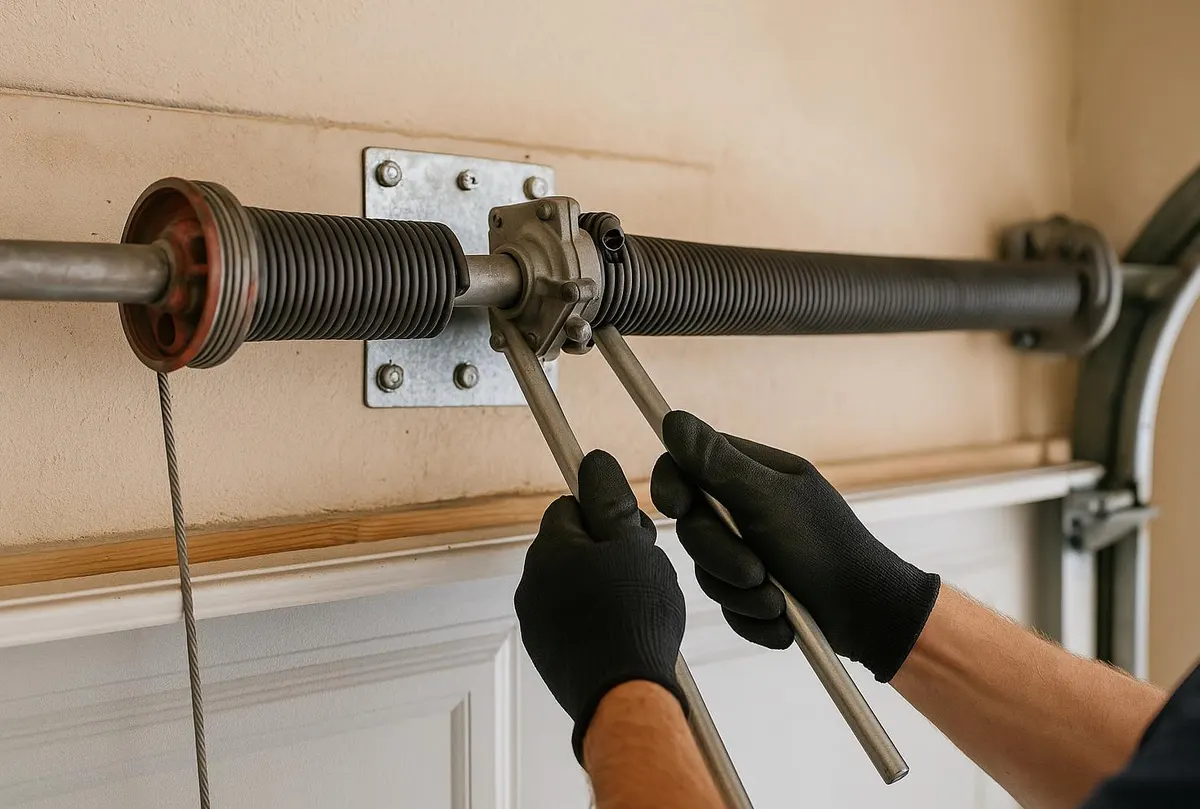
- Lightly coat the springs. A thin layer of lubricant along the coils helps reduce friction and resist corrosion from humidity and salt air. Spray and move on — don't touch the winding cones or adjust tension.
- Lubricate the opener's drive system. Chain-drive openers need a chain-specific lubricant; screw-drive units take a lithium grease made for that purpose. Follow the owner's manual for your model.
- Wipe excess and test. Remove any drips so lubricant doesn't collect grit, then reconnect the opener and run the door through a few full cycles, listening for remaining noise.
What's Safe for Homeowners vs. What Needs a Technician
Cleaning and lubricating hinges, rollers, tracks, and the opener's drive system are reasonable DIY tasks with basic tools. What's not a homeowner job: anything involving spring tension, bent or misaligned tracks, or a cable that's frayed or off its drum. Torsion springs are under extreme tension, and adjusting or replacing them without the right bars and training is a serious injury risk.
When to Call Yonkers Garage Door
If lubrication doesn't quiet the noise, if the door is still sticking or hesitating, or if you notice a stretched or rusted spring while cleaning, it's time to call in a technician. Our Maintenance & Tune-Up visits cover a full hardware inspection, track alignment check, and balance test — the things that catch small problems before a nor'easter or a hard freeze turns them into a dead door. If a spring is already showing wear, our Spring Replacement service handles it safely with the right tools, same-week in most cases.
Get your garage door ready for winter before the first freeze hits. Call Yonkers Garage Door today to schedule a tune-up anywhere in Yonkers, NY and southern Westchester County.